Dungeon’s and Dragons has been going through a renaissance for the past few years thanks to shows like Critical Role and Dimension 20 as well as games like Baldur’s Gate III. New players are joining their first campaigns all the time, and some don’t know where to start. I certainly didn’t. My first character was so poorly built that he was useless at everything! To save other newbies some grief now that I’m a seasoned adventurer, here’s a guide to building a DnD 5th edition character without making the same mistakes I did! To get started you’ll need a character sheet, you can use the official one if you’d like, and the player’s handbook if you have access to it or if not you can use the dnd 5e wikidot.
1) Consider Your Setting
If you’re about to start a new adventure be sure to discuss the general plot and location of your adventure with your Dungeon Master (DM). You don’t want to build a character who wants to slay a dragon in a story about fighting an undead army! Make sure your character fits well in the world to ensure a smooth playing experience for your first character.
2) Select a Class
There are 13 official classes in Dungeons and Dragons. You can learn about them from a player’s handbook if you have one, or from the website provided in the introduction.
DnD classes fall into three groups that determine how they feel to play:
- Full Caster, classes where you’ll mostly be using magic in and out of combat (Wizard, Druid, Cleric, Bard, Sorcerer, and Warlock)
- Half Caster, classes where you’ll use a mixture of magic and weaponry (Artificer, Ranger, Paladin)
- Martial, classes where you’ll be using no magic and focusing solely on your character’s physical and mental prowess (Barbarian, Fighter, Monk, Rogue)
Whichever class you choose will determine how you build the rest of your character, so choose something that sounds fun to you!
3) Select a Lineage and Background
In DnD lineages, or races determine your character’s looks, what languages they speak, and what special skills or abilities they may have. Lineages include things like elves, dwarves, or gnomes that you might be familiar with from other works in the fantasy genre. Your character’s background refers to what sort of things your character would’ve been up to prior to being called on this adventure and will also determine a few skills and starting equipment. Maybe your character was a sailor, or an acrobat, or a scholar. Information on lineages and backgrounds can be found in the players handbook or on the website provided in the introduction.
4) Set Up Your Ability Scores
Ability scores are usually the trickiest thing for new players to understand. Each class has a primary ability and the score for that ability should be your characters highest. Roll20 has a good explanation of what ability scores are and which caster classes use which abilities. For martials barbarians typically prioritize strength, rogues typically prioritize dexterity, and fighters and monks typically choose strength or dexterity depending on what the player prefers, though monks will also need to prioritize wisdom.
But how do you get your scores?
There are three main ways to get ability scores, which one you choose will likely be up to your DM, but here are resources for all three:
- Standard Array: The simplest method. You’re given the standard set of scores 15, 14, 13, 12, 10 and 8 and are free to plug each score into an ability of your choosing and add any relevant bonuses from your character’s lineage (e.g. A wood elf rogue might choose 15 dexterity, 14 constitution, 13 wisdom, 12 charisma, 10 strength, and 8 intelligence. Their +2 to dexterity and +1 to wisdom from their wood elf lineage would bring those scores up to 17 and 14 respectively.)
- Point Buy: An option with a bit more freedom where you can manually choose your scores. I’m not going to explain the math behind it and instead direct you to chicken dinner which has a solid built in point buy system.
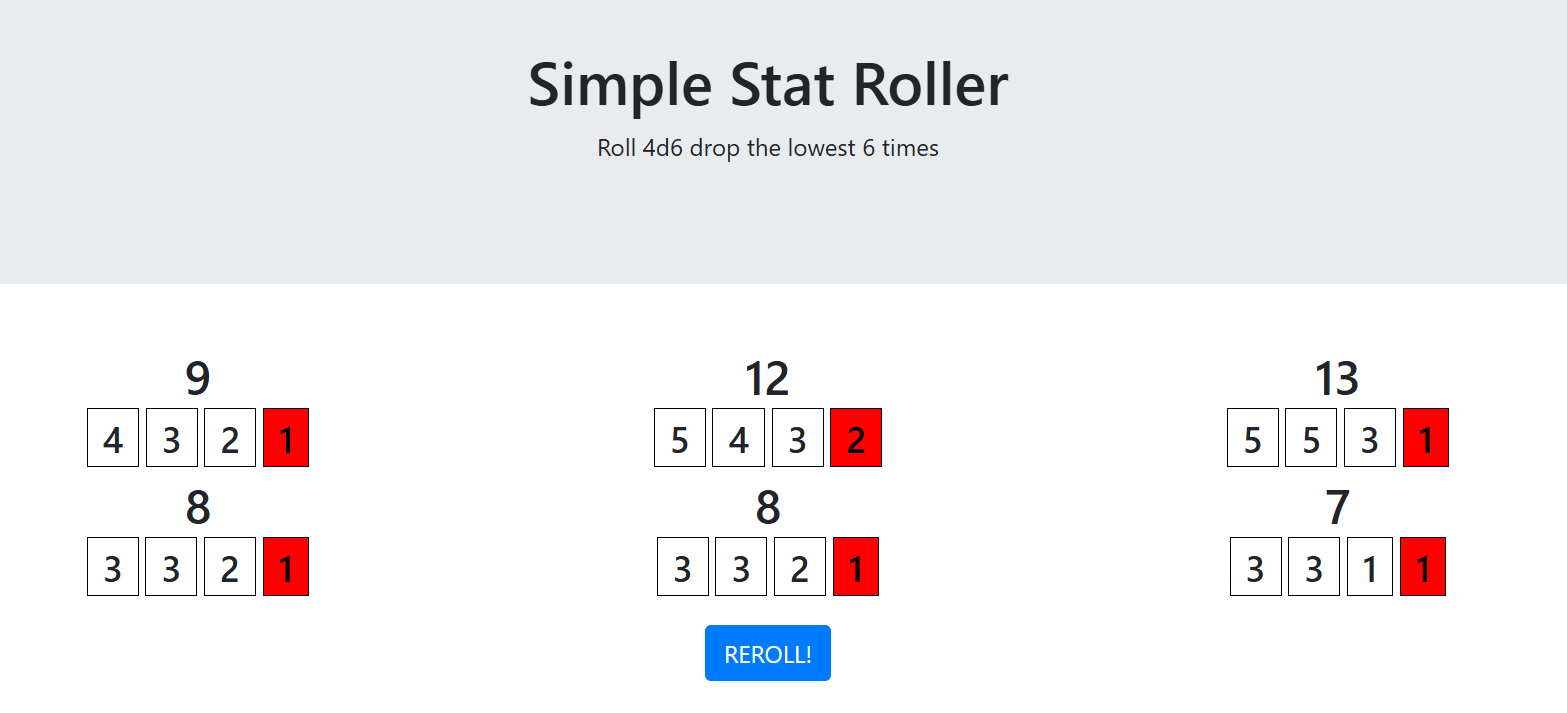
- Rolling: By far the most chaotic way to build a character. The method involves rolling 4 six-sided dice 6 times. After each roll you add the total of the three highest dice and disregard the lowest one. Afterwards you’ll have six scores to use for your character. Statroller can roll them for you if you don’t have dice. It can also be good to play around with to get an understanding of how stat rolling works. Be warned though, you can end up with a character with very poor stats by rolling!
5) Select your skills and starting equipment
The skills your character can choose from are determined by class, background and race. Be sure to note which skills you have and where they came from. At level one skills you are proficient in will gain a +2 bonus to rolls you make in them on top of the bonus from your ability score. For example if your wood elf rogue has a +3 to dexterity and is proficient in stealth, then you would gain a +5 bonus to stealth rolls.
Starting equipment is also determined by class and background. When selecting starting armor and weapons you’ll want to consider a few things:
- Is your character proficient with this type of armor or weapon? (Armor and weapon proficiencies are granted by your class.)
- Does your character have a high enough ability score to wield this type of weapon or wear this type of armor? (Information on armor. Information on weapons.)
6) Set Off on Your Adventure!
Now you should be ready to play! Be sure to give your character a name, and think up a backstory for them with your DM! Happy Questing!